Versatility
It All Begins Here
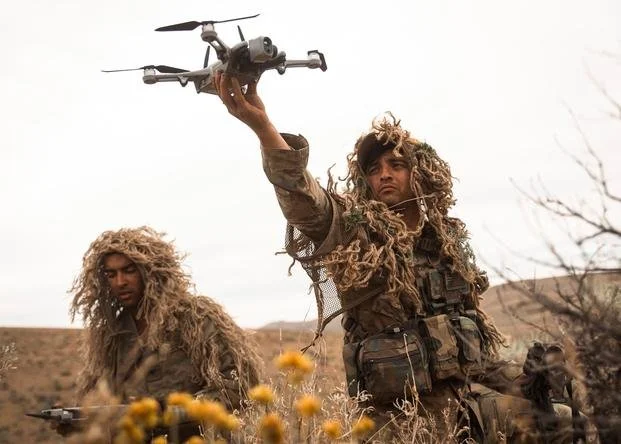
Another perceived benefit of using drones in warfare is their versatility and customizability. Drones can use many different types of ammunition, “Modernization Approaches When it comes to drone-dropped munitions, three main approaches exist for the short term: leveraging existing munitions (grenades, mortars, mines) for drone-dropping operations or strapped to drones for direct-attack loitering operations, using 3D-printed assembled cases (drone-specific munitions), and using improvised explosive devices (IEDs) such as soda can bombs and Molotov cocktails. [...]the deployment to military organizations and the sustainment phase would have to include new equipment training, storage, and logistics for the new munitions. [...]IEDs strapped onto drones have become a growing concern in warfare and have played a significant role in irregular warfare” (Lima). Guns require specific type of ammunition depending on what type you are using. With drones however, there is an endless amount of options; including being able to produce it yourself. Drones have a unique ability to adapt to any situation, unlike any other warfare technology. Different types of ammunition can be used in different scenarios, which allows the user to always be equipped for whatever they need to do. Drones being able to use any ammunition highlights their vast versatility in modern warfare. However, the versatility of drones is nothing new. Even when they were first being invented, they had multiple uses. “Drones were born during WWI as well: the French captain Max Boucher invented the first radio-controlled, remotely piloted aircraft, a Voisin 150 HP that flew a thousand meters at an altitude of 50 m with a payload of 95 kg, on July 2, 1917 (Lecerf 1920). The ‘Kettering Bug’ developed at the same time in the US was a flying bomb, as it exploded on target, and therefore a precursor to guided missiles, rather than drones”(Jeangene Vilmer). The vast differences in the two first drone models can give us an insight on how many uses drones actually have. With one being like a missile, and the other like an aircraft, it highlights how the technology of drones can be used in many different ways.
Accessibility
It All Begins Here
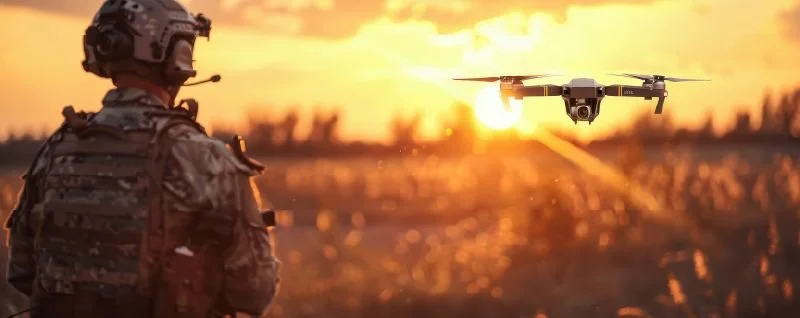
One of the perceived benefits of drone warfare is that it makes warfare more accessible. This accessibility is supported by large scale manufacturing and newfound stealth in drones. Drones have not always been easy to acquire, but recent innovations have made them easier than ever to buy, “In the early days of the war in Ukraine, soldiers beat back Russian invasion by adding deadly modifications to the Mavic, a drone sold to hobbyists by DJI, a Chinese company that is the world largest drone manufacturer. Versions of the Mavic cost between $300 and $5,000”(Stockman). Large scale drone manufacturing has only recently started in full effect due to the rise in hobbyists and innovations in drones. Large scale manufacturing makes them highly accessible to just about anybody in the world who wants one, which includes militaries who are in need of modern weaponry. Production at this rate also significantly decreases the prices, which allows militaries to purchase more than they would have before. The ability to acquire large amounts of drones for cheap prices makes drone warfare more accessible to any country, regardless of the funds they have.
Drone accessibility doesn't come to a halt with cheap pricing and vast quantities. Along with making it easier to acquire drones, it also makes it easier to get close to the enemy, “That drone, called the Archer, managed to hover about 10 feet over the soldiers’ heads, despite their jamming equipment. Its radio toggled between multiple frequencies, switching every time the soldier tried to jam it” In previous wars it would have been challenging to get within 10 feet of an enemy soldier. With soldiers' lives on the line, getting close to the enemy wasn't always a good idea. But with drone’s evolving ability to avoid jamming equipment and get closer to enemies, soldiers would now be able to get closer to the enemies than ever before, without putting their life on the line. This makes warfare more accessible to countries that might not have the advantage in numbers, and to other countries who just don't want to risk a portion of their population.